第八戒:盗んではならない
十戒は、イエスを通してどのように新しい天と新しい地を指し示すのか第八戒:盗んではならない
この戒めは、救いを獲得する手段ではなく、恵みによる救いの物語の中で読みます。AI・共有ツール質問
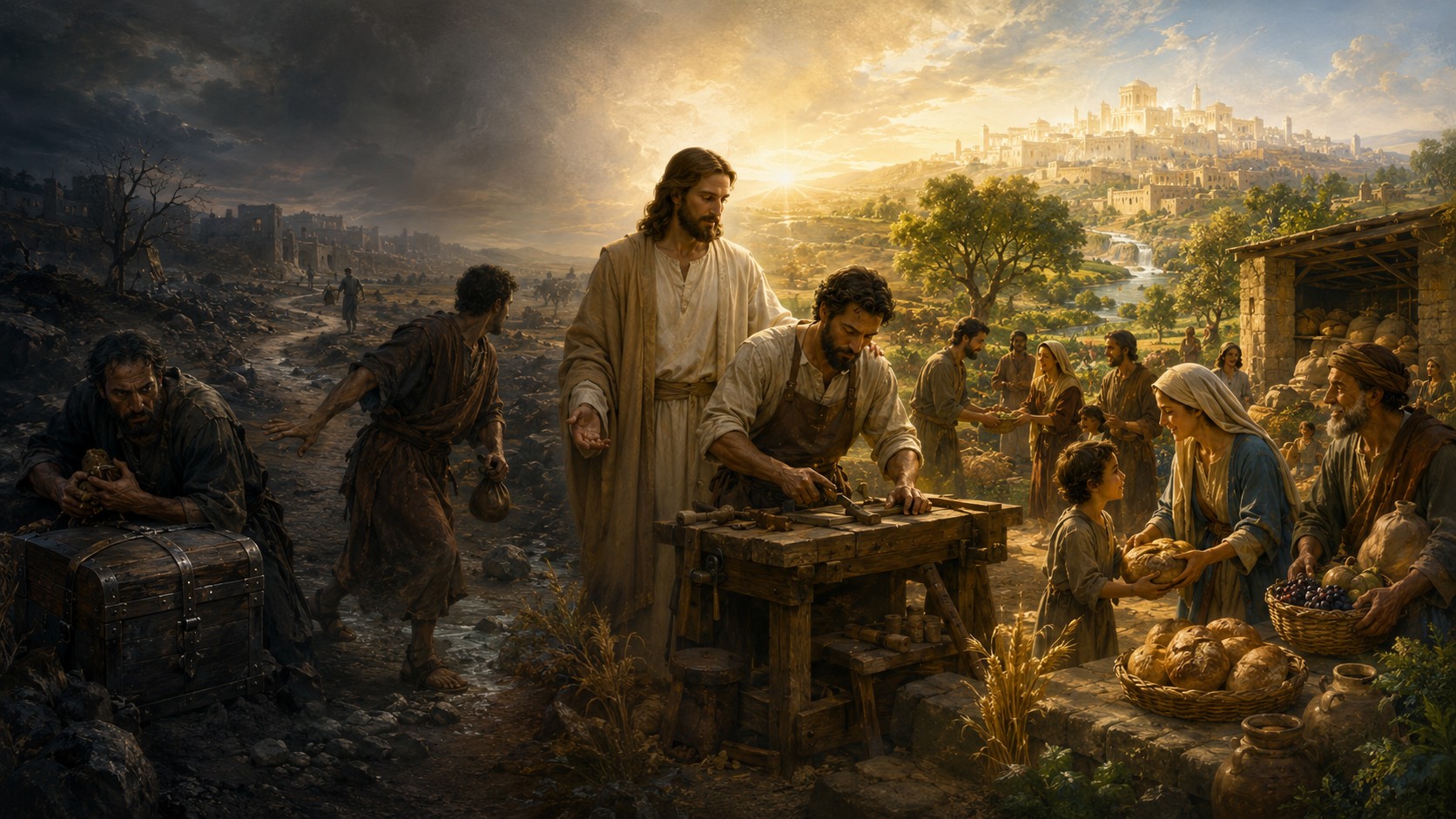
You shall not steal. Let the thief steal no longer, but labour honestly, so as to have something to share with anyone in need.
戒めは心の向きを明らかにします。聖書本文、一般的なキリスト教理解、著者の整理や推論を区別して読むことが大切です。
Six forms of taking exposed by the Eighth Commandment
Property and labour
Theft, appropriation and exploitation seize another person’s work and destroy justice and trust.
Time and achievement
Plagiarism, false credentials, unpaid obligations and wasted time can bypass the cost one owes.
Authority and position
Manipulation can seize a role not yet entrusted and turn vocation into private possession.
Reputation and trust
Misattributing credit or misleading others steals another person’s name and communal confidence.
People are not resources
Churches, parents and leaders must not possess people as achievements; people belong first to God.
God’s glory
Using God’s name for power or human plans can become an attempt to take God’s role.
From taking and shortcuts to faithfulness and New Creation
- 01
Name discontent
Comparison, coveting and distrust
- 02
Refuse shortcuts
Do not bypass work, learning or growth
- 03
Repent in Christ
Stop, confess, restore and repair
- 04
Steward faithfully
Honour time, gifts and trust in small things
- 05
Become a provider
Share abundance and await the true inheritance
The direct command and its applications must remain distinct
Do not take unjustly
The command directly forbids taking what is not yours; the neighbouring prohibition of coveting exposes possessiveness.
From not stealing to work and sharing
Ephesians 4:28 directs repentance toward honest labour and provision; Zacchaeus shows restitution as fruit.
People, children, ministry fruit and resources are entrusted
Treating people as institutional achievement or blocking maturity is the author’s stewardship application, not the lexical definition of Exodus 20:15.
Land, political power and changing the world
Connecting modern Israel, territorial claims, church politics and millennial order to this command is the author’s disputed synthesis, not a direct biblical conclusion and not broadly recognised by mainstream churches.
Four biblical windows on the Eighth Commandment
Do not steal, deceive or withhold wages; outward taking and inward coveting are connected.
Faithfulness begins in little things; meeting Jesus leads Zacchaeus to restitution and generosity.
Believers work honestly and serve as faithful stewards of what God entrusts.
The nations’ glory enters the City without plunder, lies or rivalry for power.
イエス・キリストを通して、外側の境界は聖霊に新しくされる聖い生き方へと深められ、新しい天と新しい地を指し示します。
一般的なキリスト教の理解 +
歴史的キリスト教は通常、この戒めを神の道徳的な御心の一部と理解し、イエスがその意味を人の心にまで深めたと考えます。
このサイトの整理
戒めは心の向きを明らかにします。聖書本文、一般的なキリスト教理解、著者の整理や推論を区別して読むことが大切です。