The Eighth Commandment
How the Ten Commandments Point Through Jesus to the New Heaven and New EarthThe Eighth Commandment: Do Not Steal
Do not steal: do not seize possessions, results, time, authority, trust or God’s glory by a shortcut.AI and sharing toolsAsk
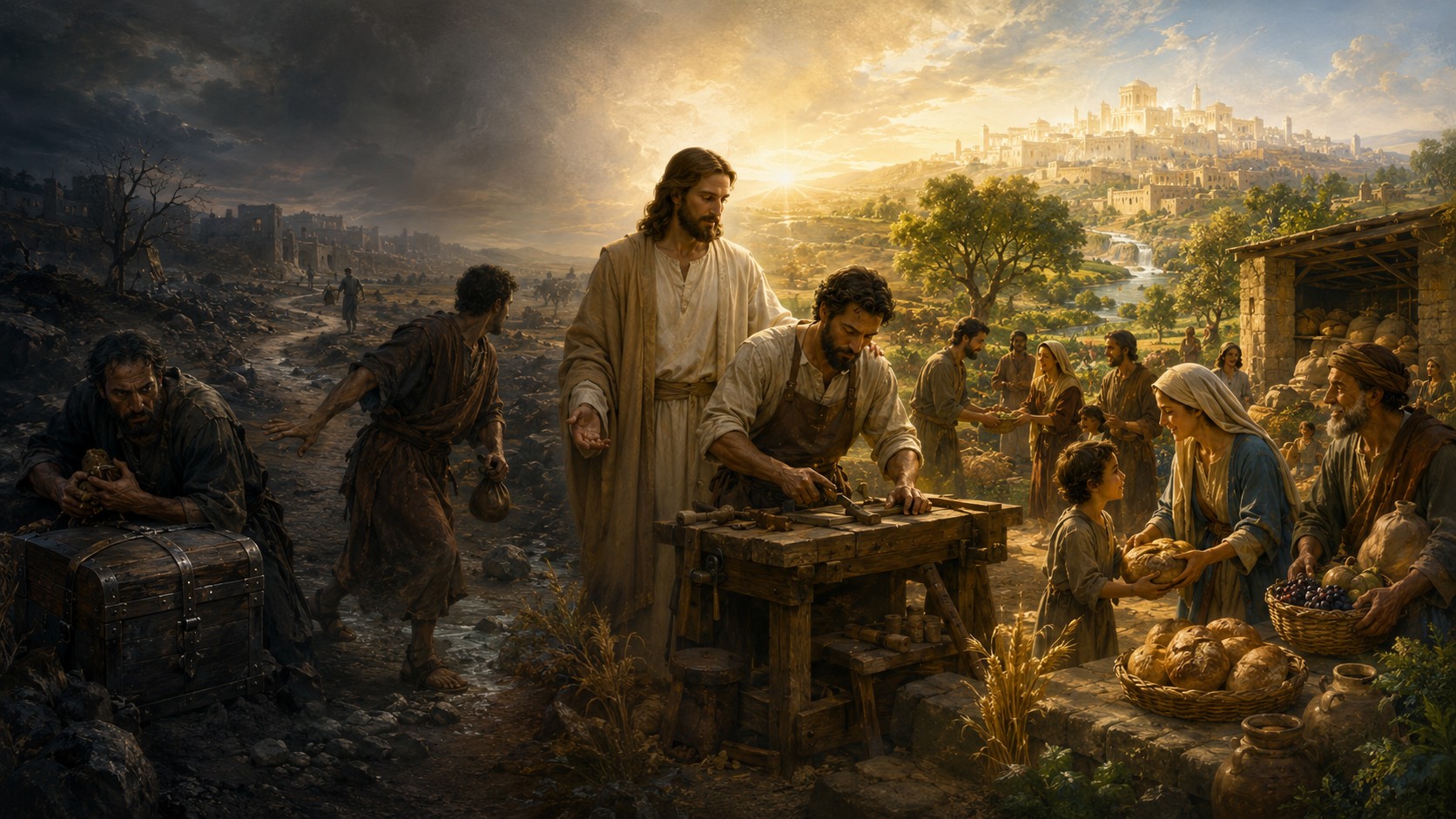
You shall not steal. Let the thief steal no longer, but labour honestly, so as to have something to share with anyone in need.
In Christ the command moves beyond stopping theft toward honest work, restitution, faithful stewardship and generous sharing. These are fruits of grace, never a way to earn salvation.
Six forms of taking exposed by the Eighth Commandment
Property and labour
Theft, appropriation and exploitation seize another person’s work and destroy justice and trust.
Time and achievement
Plagiarism, false credentials, unpaid obligations and wasted time can bypass the cost one owes.
Authority and position
Manipulation can seize a role not yet entrusted and turn vocation into private possession.
Reputation and trust
Misattributing credit or misleading others steals another person’s name and communal confidence.
People are not resources
Churches, parents and leaders must not possess people as achievements; people belong first to God.
God’s glory
Using God’s name for power or human plans can become an attempt to take God’s role.
From taking and shortcuts to faithfulness and New Creation
- 01
Name discontent
Comparison, coveting and distrust
- 02
Refuse shortcuts
Do not bypass work, learning or growth
- 03
Repent in Christ
Stop, confess, restore and repair
- 04
Steward faithfully
Honour time, gifts and trust in small things
- 05
Become a provider
Share abundance and await the true inheritance
The direct command and its applications must remain distinct
Do not take unjustly
The command directly forbids taking what is not yours; the neighbouring prohibition of coveting exposes possessiveness.
From not stealing to work and sharing
Ephesians 4:28 directs repentance toward honest labour and provision; Zacchaeus shows restitution as fruit.
People, children, ministry fruit and resources are entrusted
Treating people as institutional achievement or blocking maturity is the author’s stewardship application, not the lexical definition of Exodus 20:15.
Land, political power and changing the world
Connecting modern Israel, territorial claims, church politics and millennial order to this command is the author’s disputed synthesis, not a direct biblical conclusion and not broadly recognised by mainstream churches.
Four biblical windows on the Eighth Commandment
Do not steal, deceive or withhold wages; outward taking and inward coveting are connected.
Faithfulness begins in little things; meeting Jesus leads Zacchaeus to restitution and generosity.
Believers work honestly and serve as faithful stewards of what God entrusts.
The nations’ glory enters the City without plunder, lies or rivalry for power.
Through Jesus, the Eighth Commandment points to the New Creation: Christ turns takers into givers and possessors into faithful stewards. Grace forms honest work, restitution, generosity and patient trust in God’s eternal inheritance.
A traditional reading of this commandment +
Historic Christian teaching usually treats this commandment as part of God’s moral will and sees Jesus carrying it into the human heart. Traditions differ on how the Law applies within Church life.
This site’s synthesis
Ephesians describes repentance as stopping theft, working honestly and sharing abundance. This site also treats people, children, ministry fruit and resources as God’s trust, while marking political and territorial applications as the author’s contested synthesis.