Điều răn thứ nhất: Không có thần nào khác
Mười Điều Răn chỉ qua Chúa Giê-su đến trời mới và đất mới như thế nàoĐiều răn thứ nhất: Không có thần nào khác
Điều răn này được đọc trong câu chuyện cứu rỗi bởi ân điển, không phải như cách kiếm lấy sự cứu rỗi.AI và công cụ chia sẻHỏi
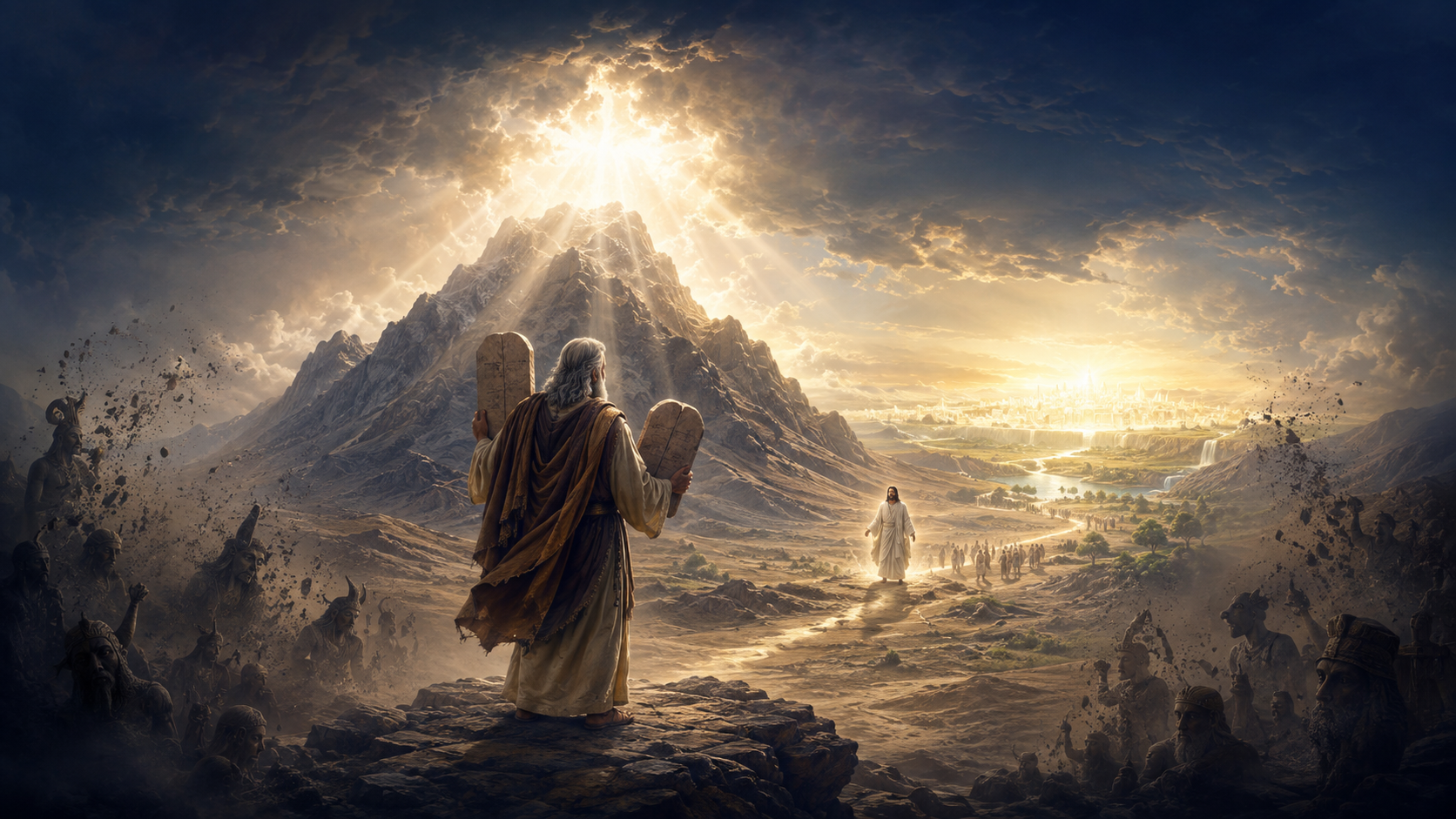
I am the LORD your God … You shall have no other gods before me.
Điều răn bày tỏ hướng đi của lòng người; cần phân biệt văn bản Kinh Thánh, cách hiểu Cơ Đốc giáo phổ biến và sự tổng hợp của tác giả.
Five problems exposed by the First Commandment
Does truth have one foundation?
If God is merely one option, love, justice, good and worship lose their final measure.
Is the heart’s worship divided?
Power, wealth, institutions, leaders and desire can quietly occupy God’s place.
Who defines God?
God is not shaped around human needs; he reveals himself and calls for a response.
Worship rests on rescue
Before the command comes: “I brought you out.” Obedience answers redemption.
Worship reorders all of life
The centre of worship shapes choices, relationships, responsibility, hope and final direction.
The First Commandment across Scripture
- 01
Sinai revelation
The one God declares himself
- 02
Covenant worship
The rescued must not turn to other gods
- 03
Jesus reveals the Father
Christ shows God’s character and redemption
- 04
The nations are called
Turn from idols to the living God
- 05
Final worship
God and the Lamb are the City’s eternal centre
Four layers of the First Commandment
Reject other gods; worship the one God
The command establishes monotheism and exclusive worship.
Begin with “I am the LORD your God”
The command rests on prior revelation, rescue and covenant, and moves through Christ toward the nations.
No statue means no rival god
Money, success, community, authority or the self can still become the practical highest centre.
Not only removing idols, but restoring the centre
The whole life returns to God; Jesus restores true worship and obedience to the Father.
Old and New Testament echoes
The LORD is one. He rescues first, then calls for undivided love and worship.
Jesus refuses worship of created power and reveals his unity with the Father.
Believers turn from idols to the one God and confess one Lord, Jesus Christ.
God and the Lamb are the City’s centre; his servants worship him and see his face.
Qua Chúa Giê-su Christ, ranh giới bên ngoài hướng đến đời sống thánh khiết được Đức Thánh Linh đổi mới và hướng về trời mới đất mới.
Cách hiểu Cơ Đốc giáo phổ biến +
Cơ Đốc giáo lịch sử thường xem điều răn này là một phần ý muốn đạo đức của Đức Chúa Trời và thấy Chúa Giê-su đưa ý nghĩa ấy vào tận lòng người.
Sự tổng hợp của trang web
Điều răn bày tỏ hướng đi của lòng người; cần phân biệt văn bản Kinh Thánh, cách hiểu Cơ Đốc giáo phổ biến và sự tổng hợp của tác giả.