Điều răn thứ hai: Không làm hình tượng
Mười Điều Răn chỉ qua Chúa Giê-su đến trời mới và đất mới như thế nàoĐiều răn thứ hai: Không làm hình tượng
Điều răn này được đọc trong câu chuyện cứu rỗi bởi ân điển, không phải như cách kiếm lấy sự cứu rỗi.AI và công cụ chia sẻHỏi
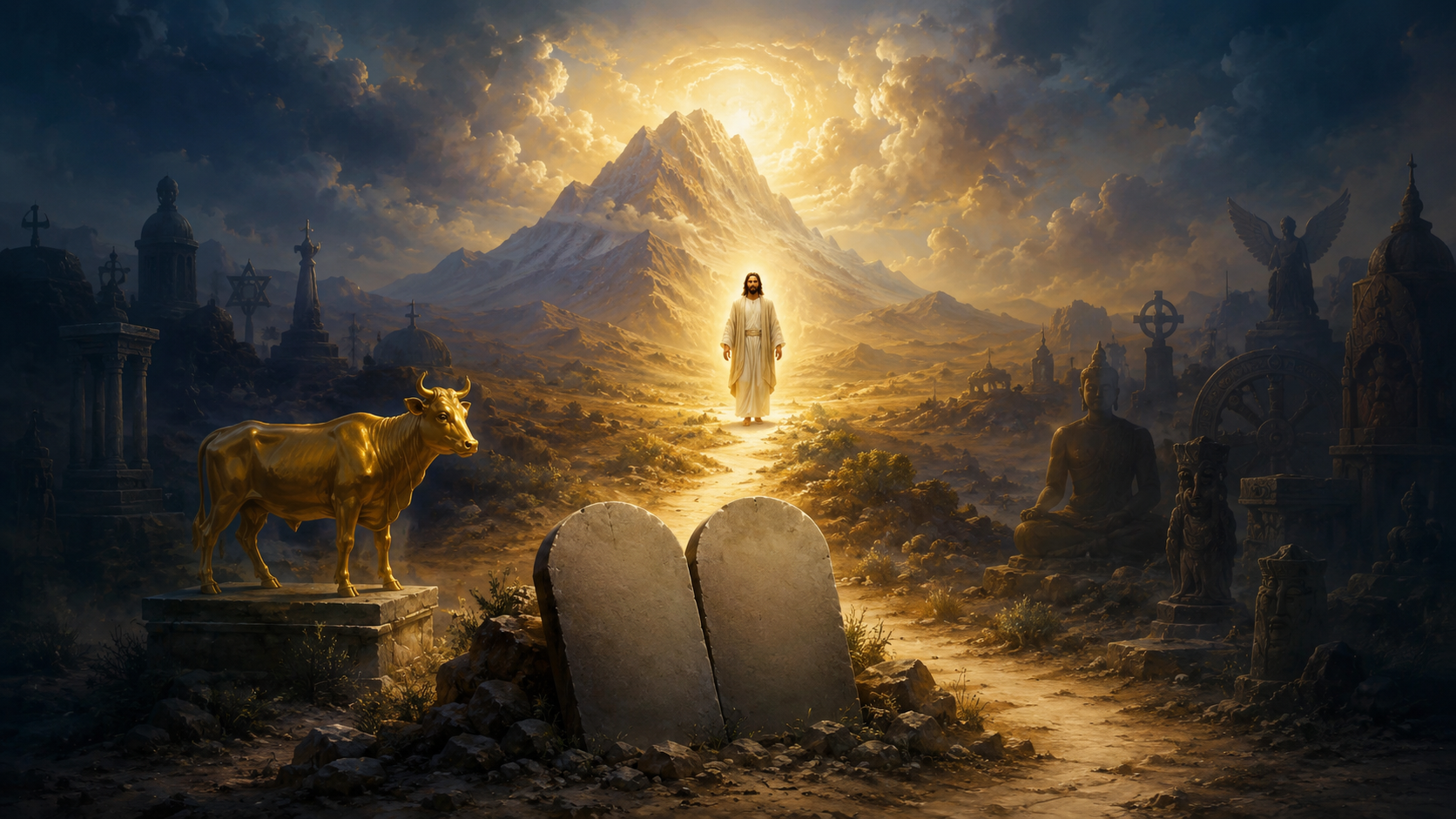
You shall not make for yourself a carved image … You shall not bow down to them or serve them.
Điều răn bày tỏ hướng đi của lòng người; cần phân biệt văn bản Kinh Thánh, cách hiểu Cơ Đốc giáo phổ biến và sự tổng hợp của tác giả.
Five ways people redefine God
Remaking God to suit us
People may keep God’s name while redrawing him around expectation, desire and security.
Letting form replace relationship
Buildings, rites, systems and traditions can serve faith—or be raised high enough to obscure God.
Turning leaders into substitutes
Pastors, prophets, apostles or celebrities can take a place that belongs to God when they are no longer tested by truth.
Framing God by culture
Success, blessing, politics or group identity can be treated as the whole of God’s character and will.
Worshipping an inwardly redesigned god
The largest idol may be the ‘god’ within who always agrees with our preferences.
From a manufactured image to God’s self-revelation
- 01
Human imagination
A safe, convenient and controllable god
- 02
Golden calf
The LORD reshaped around human wishes
- 03
Scriptural revelation
God speaks for himself
- 04
Jesus Christ
The image of the invisible God and the sure mark of his self-revelation
- 05
New Creation
God and the Lamb become the direct centre of worship
The First and Second Commandments: the right object does not guarantee a right understanding
Whom do you worship?
Reject rival gods and worship the one LORD alone.
Is the one you worship truly him?
Even while naming the LORD, do not redefine him through image, imagination or desire.
Monotheists cannot be idolaters
The golden calf shows that people can preserve God’s name while remaking him by their own method.
Let God be known as he reveals himself
Do not reshape Jesus around denomination, culture or preference; let Scripture and Christ correct us.
Biblical mirrors of the Second Commandment
Israel called the calf the god who brought them from Egypt: a manufactured image displaced God’s self-revelation.
God is not a created deity to be classified. ‘I AM’ declares his own being and sovereignty.
Jesus is the image of the invisible God, the one who makes the Father known, and the exact imprint of God’s being.
Christ is the way, truth and life; finally God and the Lamb are the Holy City’s temple and light.
Qua Chúa Giê-su Christ, ranh giới bên ngoài hướng đến đời sống thánh khiết được Đức Thánh Linh đổi mới và hướng về trời mới đất mới.
Cách hiểu Cơ Đốc giáo phổ biến +
Cơ Đốc giáo lịch sử thường xem điều răn này là một phần ý muốn đạo đức của Đức Chúa Trời và thấy Chúa Giê-su đưa ý nghĩa ấy vào tận lòng người.
Sự tổng hợp của trang web
Điều răn bày tỏ hướng đi của lòng người; cần phân biệt văn bản Kinh Thánh, cách hiểu Cơ Đốc giáo phổ biến và sự tổng hợp của tác giả.