Điều răn thứ chín: Không làm chứng dối
Mười Điều Răn chỉ qua Chúa Giê-su đến trời mới và đất mới như thế nàoĐiều răn thứ chín: Không làm chứng dối
Điều răn này được đọc trong câu chuyện cứu rỗi bởi ân điển, không phải như cách kiếm lấy sự cứu rỗi.AI và công cụ chia sẻHỏi
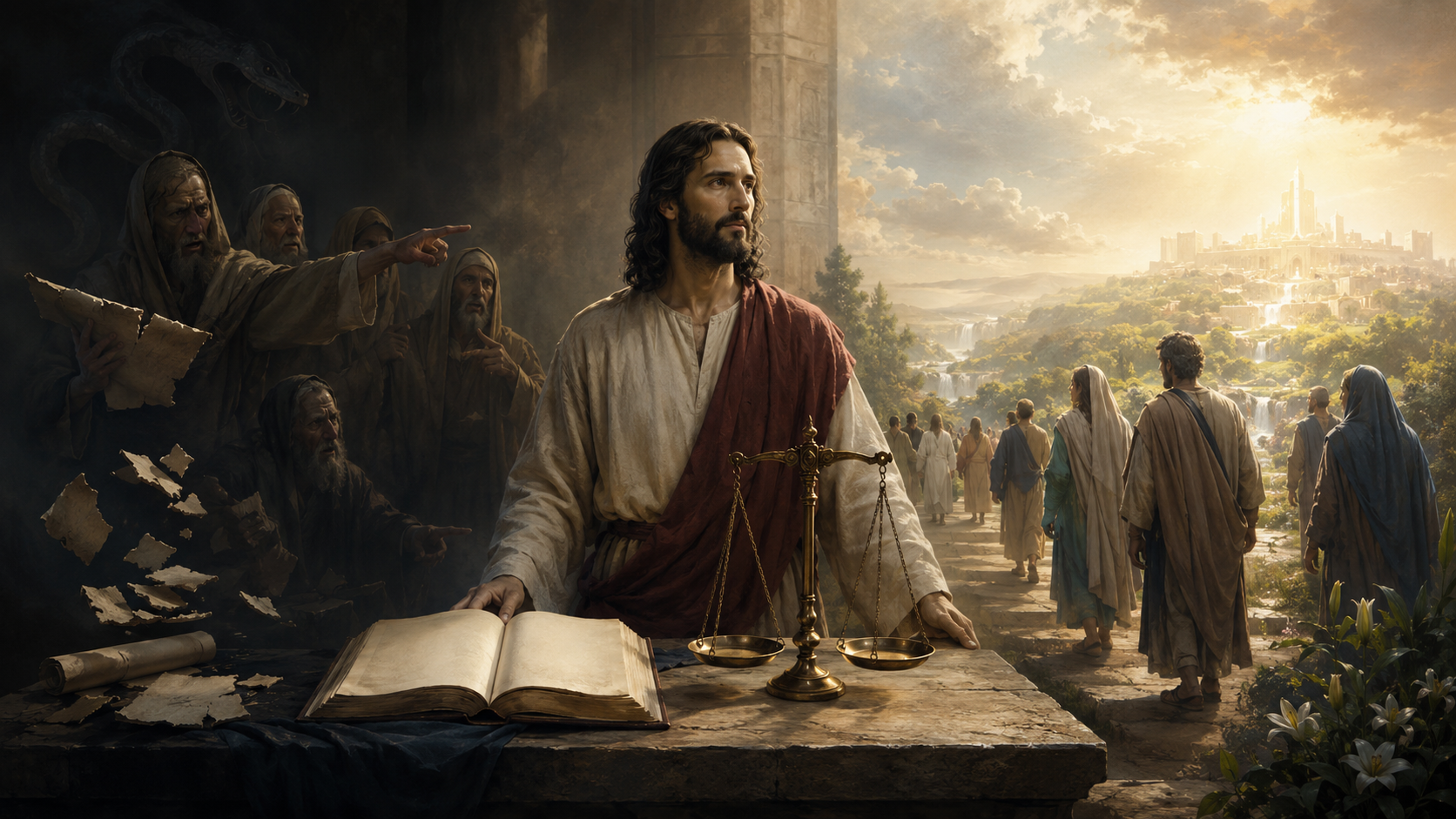
You shall not bear false witness against your neighbour.
Điều răn bày tỏ hướng đi của lòng người; cần phân biệt văn bản Kinh Thánh, cách hiểu Cơ Đốc giáo phổ biến và sự tổng hợp của tác giả.
Six forms of false witness
Twisting God’s word
The serpent in Genesis 3 uses questions, omission and revision to move people away from what God said.
Half-truth
A true fragment can conceal decisive context and create a false whole.
Proof-texting
Context, history and meaning are removed so Scripture appears to endorse human plans or interests.
Accusation
Facts may be used to distort motive, damage reputation or turn sisters and brothers into targets.
Religious packaging
Using the Lord’s name, displaying power or pleasing a crowd does not prove that a message is from God.
Motive and fruit
False witness seeks control, profit, applause or power; true witness leads toward Christ, repentance, justice and truth.
From Eden’s distortion to truth in the New Creation
- 01
God speaks truth
Truth and life come from God
- 02
Witness is distorted
Lies, omission, accusation and mixture
- 03
Jesus bears true witness
He speaks the Father’s words and lives the truth
- 04
The church discerns
Test by the whole of Scripture, fruit and motive
- 05
New Creation
Falsehood is excluded and God’s servants see his face
From courtroom testimony to a whole life of witness
Do not harm a neighbour by false testimony
The command directly protects reputation, justice and trust in court and community.
Only a complete fabrication counts
Biblical false witness may use selection, mixture, implication or corrupt motive to make hearers believe a false conclusion.
Let yes be yes and no be no
Jesus does not manipulate, flatter or promote himself; he faces truth and gives glory to the Father.
Faithful witness may be costly
The site connects Revelation’s accuser, faithful testimony and overcoming. This is the author’s theological synthesis; some extensions are not broadly recognised by mainstream churches.
Four biblical windows on the Ninth Commandment
The serpent distorts God’s word; the command forbids false testimony against a neighbour.
Jesus is misquoted and accused, yet speaks the Father’s words plainly and without self-glory.
Stephen, Paul and John bear witness with their lives; witness means fidelity to Christ, not social approval.
The accuser is overcome and falsehood cannot enter the City; the redeemed faithfully testify and see God’s face.
Qua Chúa Giê-su Christ, ranh giới bên ngoài hướng đến đời sống thánh khiết được Đức Thánh Linh đổi mới và hướng về trời mới đất mới.
Cách hiểu Cơ Đốc giáo phổ biến +
Cơ Đốc giáo lịch sử thường xem điều răn này là một phần ý muốn đạo đức của Đức Chúa Trời và thấy Chúa Giê-su đưa ý nghĩa ấy vào tận lòng người.
Sự tổng hợp của trang web
Điều răn bày tỏ hướng đi của lòng người; cần phân biệt văn bản Kinh Thánh, cách hiểu Cơ Đốc giáo phổ biến và sự tổng hợp của tác giả.