The Second Commandment
How the Ten Commandments Point Through Jesus to the New Heaven and New EarthThe Second Commandment: Do Not Make Idols
Do not make an image for God: this rejects not only carved idols, but every attempt to remake the LORD to fit us.AI and sharing toolsAsk
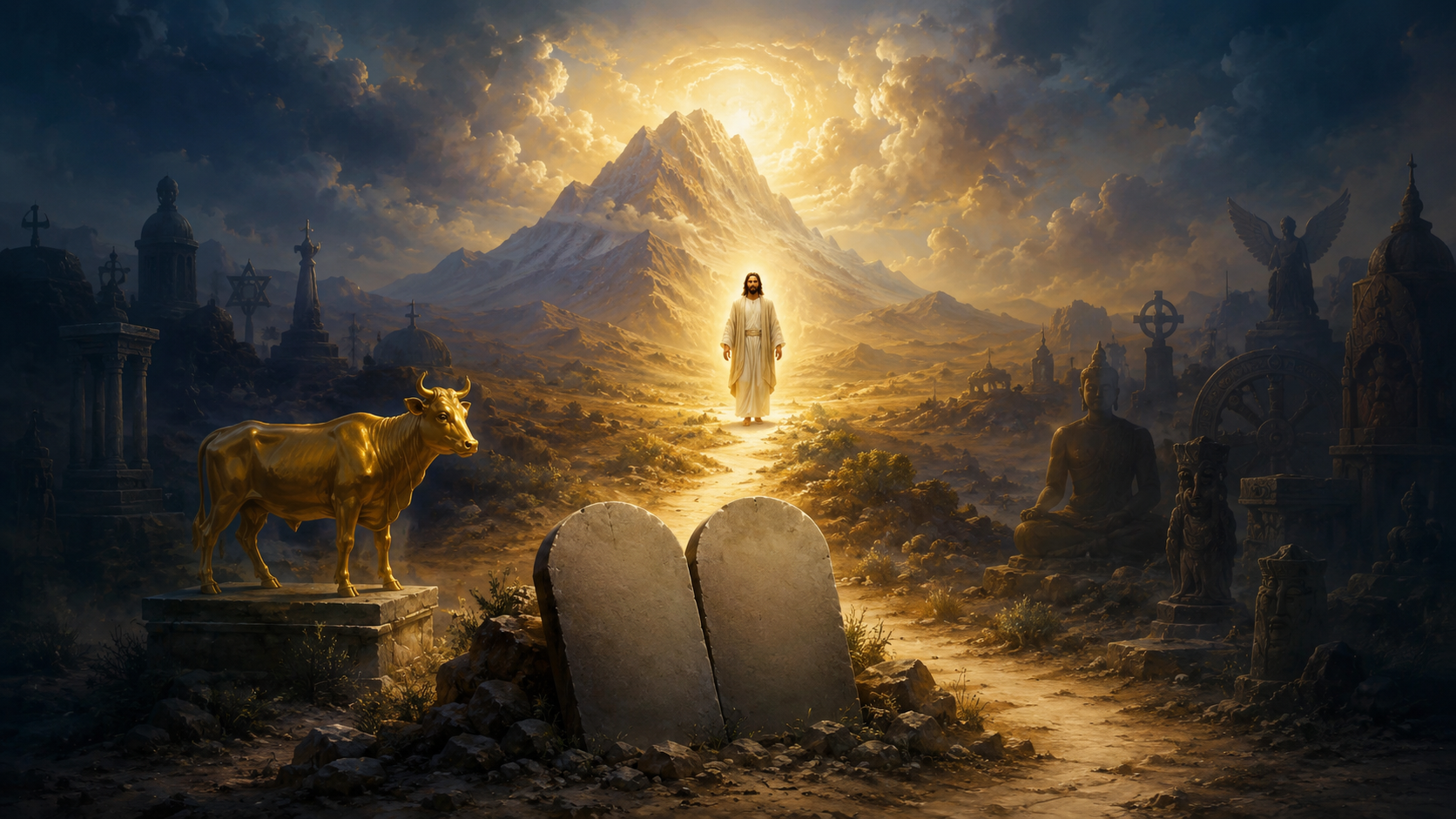
You shall not make for yourself a carved image … You shall not bow down to them or serve them.
The First Commandment asks, ‘Whom do you worship?’ The Second asks, ‘Is the God you worship truly known as he reveals himself?’
Five ways people redefine God
Remaking God to suit us
People may keep God’s name while redrawing him around expectation, desire and security.
Letting form replace relationship
Buildings, rites, systems and traditions can serve faith—or be raised high enough to obscure God.
Turning leaders into substitutes
Pastors, prophets, apostles or celebrities can take a place that belongs to God when they are no longer tested by truth.
Framing God by culture
Success, blessing, politics or group identity can be treated as the whole of God’s character and will.
Worshipping an inwardly redesigned god
The largest idol may be the ‘god’ within who always agrees with our preferences.
From a manufactured image to God’s self-revelation
- 01
Human imagination
A safe, convenient and controllable god
- 02
Golden calf
The LORD reshaped around human wishes
- 03
Scriptural revelation
God speaks for himself
- 04
Jesus Christ
The image of the invisible God and the sure mark of his self-revelation
- 05
New Creation
God and the Lamb become the direct centre of worship
The First and Second Commandments: the right object does not guarantee a right understanding
Whom do you worship?
Reject rival gods and worship the one LORD alone.
Is the one you worship truly him?
Even while naming the LORD, do not redefine him through image, imagination or desire.
Monotheists cannot be idolaters
The golden calf shows that people can preserve God’s name while remaking him by their own method.
Let God be known as he reveals himself
Do not reshape Jesus around denomination, culture or preference; let Scripture and Christ correct us.
Biblical mirrors of the Second Commandment
Israel called the calf the god who brought them from Egypt: a manufactured image displaced God’s self-revelation.
God is not a created deity to be classified. ‘I AM’ declares his own being and sovereignty.
Jesus is the image of the invisible God, the one who makes the Father known, and the exact imprint of God’s being.
Christ is the way, truth and life; finally God and the Lamb are the Holy City’s temple and light.
Through Jesus, the Second Commandment points to the New Creation: God does not accept our redesigned versions of him. He reveals himself in Christ, and God and the Lamb become the eternal centre that no image, institution or desire can replace.
A traditional reading of this commandment +
Historic Christian teaching usually treats this commandment as part of God’s moral will and sees Jesus carrying it into the human heart. Traditions differ on how the Law applies within Church life.
This site’s synthesis
The detailed visual study for this commandment has not yet been supplied. The site does not invent the author’s undeveloped argument.