The Tenth Commandment
How the Ten Commandments Point Through Jesus to the New Heaven and New EarthThe Tenth Commandment: Do Not Covet
Do not covet: the Law reaches the heart, exposing how comparison, discontent and possession can put created things in God’s place.AI and sharing toolsAsk
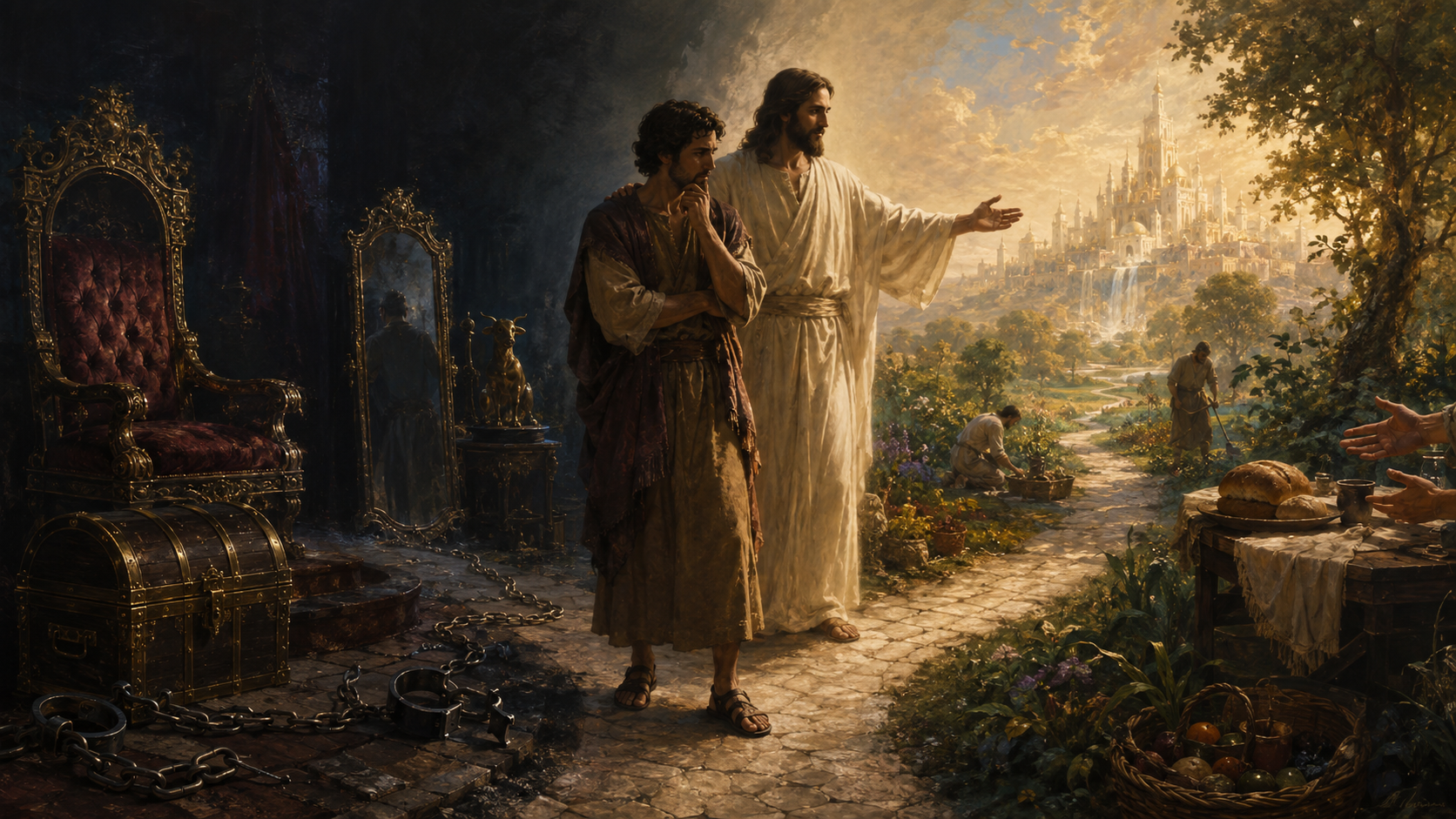
You shall not covet your neighbour’s house, spouse, servants, animals, or anything that belongs to your neighbour.
Wealth, ability and property are not themselves the enemy. Coveting turns God’s gifts into idols and another person’s possessions into our imagined fulfilment. Christ does not merely demand poverty; he frees the heart from bondage to money and comparison.
How coveting spreads from the heart
Comparison awakens desire
Another person’s relationships, status, wealth or success becomes the imagined answer to our lack.
Wealth replaces God
When possession defines security, identity and hope, a tool becomes the heart’s master.
Means become distorted
David’s story shows desire spreading into adultery, deception, killing and seizure.
Churches may covet too
Scale, branding, stage, status and control can displace first love and truth.
Contentment is not passivity
Paul learned contentment in plenty and want: not abandoning duty, but refusing control by circumstance.
Property is entrusted
Money, ability and authority are managed, shared generously and released when God calls.
From inward coveting to freedom in Christ
- 01
Comparison
Another’s goods become the answer
- 02
Idolatry
Wealth, success or relationship replaces God
- 03
Christ exposes the heart
The cross reveals the true Lord and renews
- 04
Contented stewardship
Work, share, practise restraint and release
- 05
New Creation
A purified, faithful people receive God’s trust
Do not covet does not mean hate wealth or abandon initiative
Do not desire to seize what belongs to a neighbour
The command names household, labour and property, protecting relationships while bringing Law into desire.
Wealth is worldly and poverty is spiritual
Scripture warns against love of money without treating material goods as inherently evil; the question is who rules the heart.
Not merely poorer, but free
The rich ruler’s problem was not possession alone, but a security he could not release to follow the Lord.
Contentment prepares faithful stewardship
The site links contentment, stewardship, overcoming and eternal responsibility. Some extensions are not broadly recognised by mainstream churches and must not become salvation by works.
Four biblical windows
The command forbids coveting; David shows hidden desire spreading into harm and consequence.
Treasure reveals the heart; the rich ruler keeps outward commands yet cannot release his controlling master.
Greed is idolatry; contentment, generosity and trust in God bring freedom from wealth’s mastery.
Laodicea warns against affluence and self-satisfaction. The author applies this to some churches today, not to every large or mainstream church.
Through Jesus, the Tenth Commandment points to the New Creation. Salvation is wholly by grace; Christ frees from comparison, greed and bondage to wealth, and the Spirit forms contented, generous, faithful stewards. Final inheritance is God’s gift and trust, never wages earned by possession or works.
A traditional reading of this commandment +
Historic Christian teaching usually treats this commandment as part of God’s moral will and sees Jesus carrying it into the human heart. Traditions differ on how the Law applies within Church life.
This site’s synthesis
Coveting defines happiness by comparison and treats another’s relationships, status or possessions as the answer to one’s lack.