Ten Commandments — Preface
How the Ten Commandments Point Through Jesus to the New Heaven and New EarthHow the Ten Commandments Point Through Jesus to the New Heaven and New Earth
From rescue, Law and holiness toward cleansing in Christ and the New Creation.AI and sharing toolsAsk
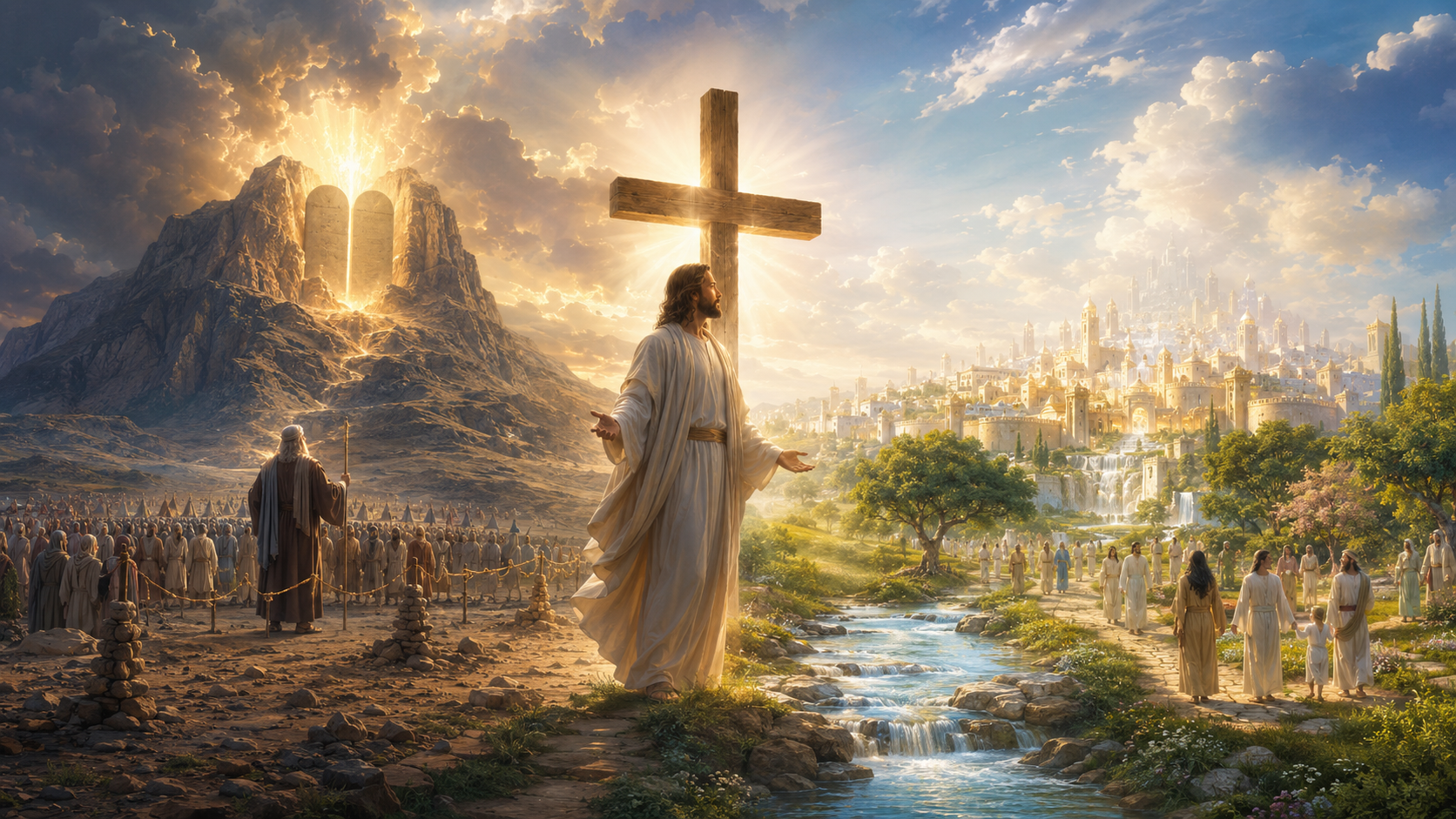
I am the LORD your God, who brought you out of the house of slavery.
God rescues before giving the commandments. Grace is the starting point; holiness is the direction of redeemed life.
Five visual keys to the preface
Rescue comes first
God brings Israel out of Egypt before giving the commandments at Sinai.
Holy boundaries remain
Drawing near to the Holy One requires preparation, cleansing and reverence.
Law is a signpost
The Law exposes sin and gives direction; it is not a way to earn salvation.
Christ bears and fulfils
Jesus bears judgment and reveals the love, obedience and wholeness toward which the Law points.
The final order is holy
The New Creation restores worship, order, relationship and life; it does not abolish holiness.
From Sinai to the New Creation
- 01
Exodus
God rescues first
- 02
Sinai
Law exposes sin and holiness
- 03
Jesus Christ
Judgment borne and Law fulfilled
- 04
Renewal by the Spirit
Grace forms purity, maturity and faithfulness
- 05
New Creation
God dwells forever with a cleansed people
Do not split Law and grace into opposing stories
The commandments express God’s moral will
They order worship, relationships and community life.
Law is a school for maturity
External boundaries prepare the immature for deeper obedience in Christ.
Old Testament means Law; New Testament means grace
Exodus already begins with rescue, while New Testament grace never lowers holiness.
Saved first, then formed in holiness
Salvation begins in grace. Maturity, victory and faithfulness are responses to grace, not payment for salvation.
Four Scripture windows
Rescue precedes covenant; the commandments are given within grace.
Jesus fulfils rather than abolishes the Law and reveals its centre in love of God and neighbour.
The Law exposes sin and leads toward Christ; justification is by grace.
God dwells with humanity; sin and death end, while the Holy City still displays purity and faithfulness.
The commandments are not a ladder to salvation but signposts for a rescued people learning holiness. Jesus fulfils their centre, the Spirit renews the heart, and the story culminates in God dwelling with humanity in the New Creation.
How the Ten Commandments Point Through Jesus to the New Heaven and New Earth
The First Commandment: You Shall Have No Other Gods
God first brings people out of bondage, then calls the redeemed to worship him alone.
The Second Commandment: Do Not Make Idols
God must not be manufactured, confined or controlled according to human need; the full study will follow the author’s forthcoming visual material.
The Third Commandment: Do Not Misuse God’s Name
God’s name must not be used to package self-interest, power or false devotion.
The Fourth Commandment: Sabbath
The seventh-day sign acknowledges the Creator; Jesus carries rest beyond calendar disputes into trust, humility, restraint and communion.
The Fifth Commandment: Honour Father and Mother
Family begins our learning of love and responsibility; honour includes respect and care, but not blind compliance or replacing God with parents.
The Sixth Commandment: Do Not Murder
Life belongs to God. The command forbids unlawful taking of life, and Jesus exposes anger, contempt, hatred and revenge at the root.
The Seventh Commandment: Do Not Commit Adultery
The command protects covenant, the body and human dignity; Jesus also exposes objectification, possessive desire and hidden betrayal.
The Eighth Commandment: Do Not Steal
The command forbids taking property and also exposes shortcuts used to seize results, authority, time, trust or glory.
The Ninth Commandment: Do Not Bear False Witness
Truth must not be distorted by lies, omission, slander or self-serving narratives.
The Tenth Commandment: Do Not Covet
The Law finally reaches the heart: sin concerns not only actions but desires that rule a person.